Bullshit. They didn’t want”: The Real Reason Izzy Stradlin Walked Away from the Guns N’ Roses Cash Grab and Equal Loot Demand!…

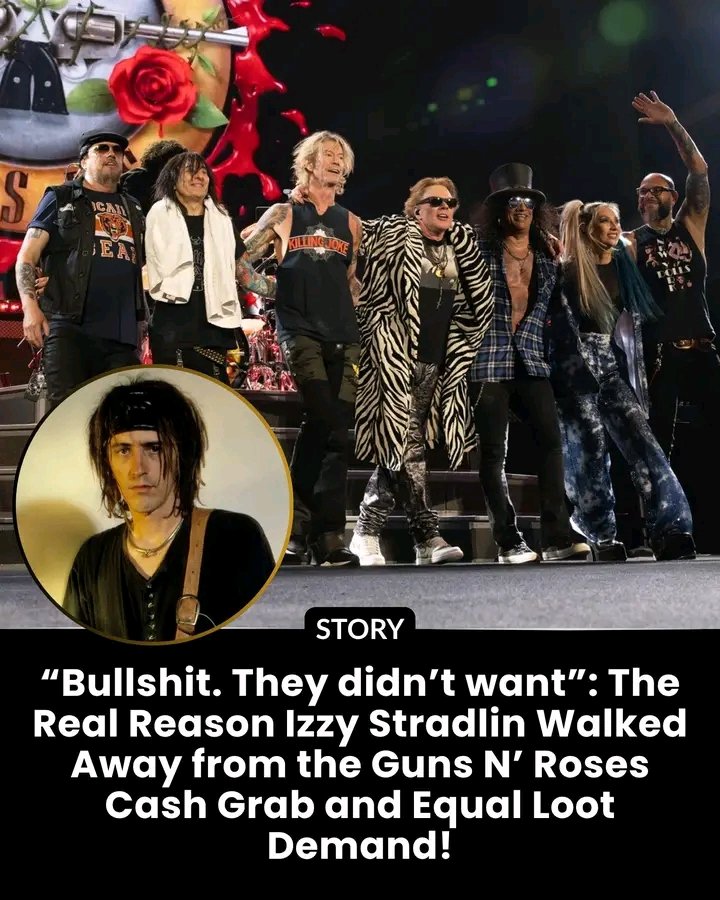
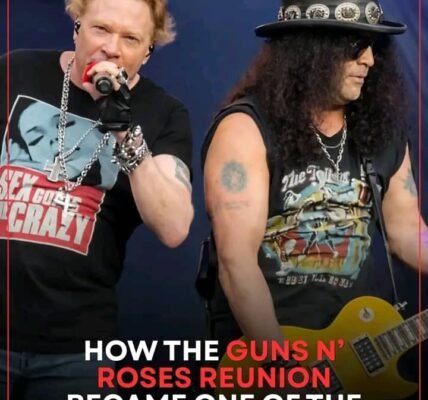
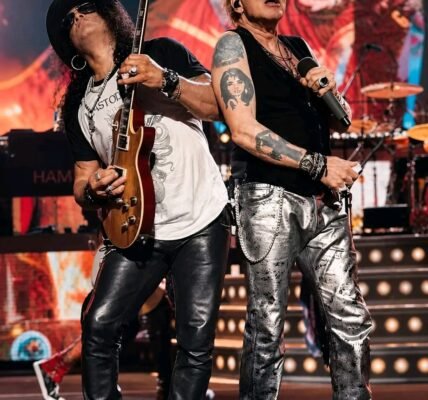
When Guns N’ Roses announced their blockbuster reunion, it felt like the impossible had finally happened. Decades of tension, fallouts, and fractured relationships seemed to melt away as Axl Rose and Slash shared the stage once more, igniting stadiums across the globe. Fans celebrated, critics applauded, and the money poured in at a staggering rate. It was, by every visible metric, one of the biggest comeback stories in rock history.
But there was one glaring absence that never quite faded into the background: Izzy Stradlin.
As a founding member and the band’s original rhythm guitarist, Stradlin wasn’t just another name on the lineup he was a core architect of the Guns N’ Roses sound. He co-wrote many of their most iconic songs, helping shape the gritty, streetwise identity that made the band legendary. So when he chose to stay away from a reunion that reportedly promised tens of millions of dollars, people had questions.
At first, the narrative seemed simple. Izzy had always been known as the quiet one, the guy who preferred a low-key life over the chaos of global fame. It was easy to assume he simply didn’t want the spotlight anymore. But behind the scenes, a different story began to emerge one that had nothing to do with reclusiveness and everything to do with principle.
“Bullshit. They didn’t want to split the loot equally.”
That blunt statement, attributed to Stradlin, cut through the speculation like a knife. According to insiders and those close to the situation, the real sticking point wasn’t whether Izzy could perform, travel, or handle the pressure. It was about fairness specifically, how the money from the reunion would be divided.
The reunion tour, often described as a “cash machine,” reportedly generated hundreds of millions of dollars. Add in rumors of a potential Las Vegas residency worth up to $50 million, and the financial stakes become even clearer. For most musicians, turning down that kind of payday would seem unthinkable. But Stradlin wasn’t most musicians.
To understand his decision, you have to go back to the beginning.
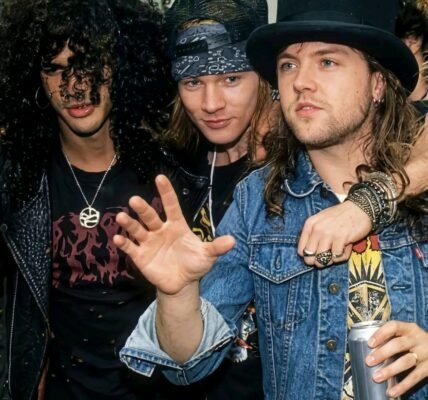
In the early days of Guns N’ Roses, before the fame, the private jets, and the sold-out arenas, there were just a handful of hungry musicians trying to survive in Los Angeles. They lived together, struggled together, and built their sound from the ground up. Stradlin was right there in the trenches, contributing not just guitar work but songwriting that would become the backbone of the band’s identity.
“We bled for every chord,” he reportedly said a phrase that captures both the hardship and the pride of those formative years.
From that perspective, the idea of unequal pay wasn’t just a business disagreement. It was, in Stradlin’s eyes, a betrayal of the very foundation the band was built on. If the reunion was going to celebrate their legacy, then that legacy had to include fairness among those who created it.
Sources suggest that the financial structure of the reunion prioritized certain members over others, reflecting their current status rather than their historical contributions. While that might make sense from a modern business standpoint, it didn’t sit well with Stradlin. For him, the band wasn’t just a brand it was a shared creation.
And that distinction made all the difference.
Walking away from millions isn’t just a financial decision; it’s a statement. In Stradlin’s case, it was a declaration that some things matter more than money. In an industry often driven by profit and spectacle, his stance feels almost radical.
It also reinforces something fans have long suspected: Izzy Stradlin has always operated on his own terms.
After leaving Guns N’ Roses in the early 1990s, he didn’t chase the same level of fame as his former bandmates. Instead, he carved out a quieter path, releasing solo music and staying largely out of the public eye. Over time, he became something of a mythic figure a founding member who chose authenticity over celebrity.
His reported retreat to a quiet life in Indiana only adds to that image. While others toured the world and headlined festivals, Stradlin found peace away from the noise. It’s a stark contrast that makes his refusal of the reunion payday even more believable.
He didn’t need the money. He didn’t need the spotlight. And he wasn’t willing to compromise his principles.
Of course, not everyone sees it that way. Some argue that the reunion was a complex business arrangement involving multiple stakeholders, contracts, and expectations. From that angle, equal pay might not have been practical or even possible. Others believe that Stradlin missed a once-in-a-lifetime opportunity to reconnect with fans and cement his place in the band’s modern legacy.
But even critics have to admit: his decision was consistent.
Izzy Stradlin didn’t suddenly become a man of principle when the money got big. He had been that way all along. His departure from the band at the height of their fame was driven by similar values a desire to step away from chaos and maintain control over his own life.
In that sense, the reunion controversy isn’t a surprising twist. It’s the continuation of a long-standing pattern.
And maybe that’s why his absence still resonates so strongly.
Every time Guns N’ Roses takes the stage without him, there’s a subtle reminder of what’s missing not just musically, but philosophically. The reunion may have brought the band back together in one sense, but it also highlighted the differences that never fully disappeared.
In the end, Izzy Stradlin’s decision isn’t just a footnote in rock history. It’s a powerful example of what it means to stand by your beliefs, even when the price is extraordinarily high.
While others cashed in on nostalgia, he chose something else entirely: integrity.
And in a world where everything seems to have a price, that might be the most valuable statement of all.