News: From Bob Dylan to David Bowie, five times musicians detested covers of their songs…..

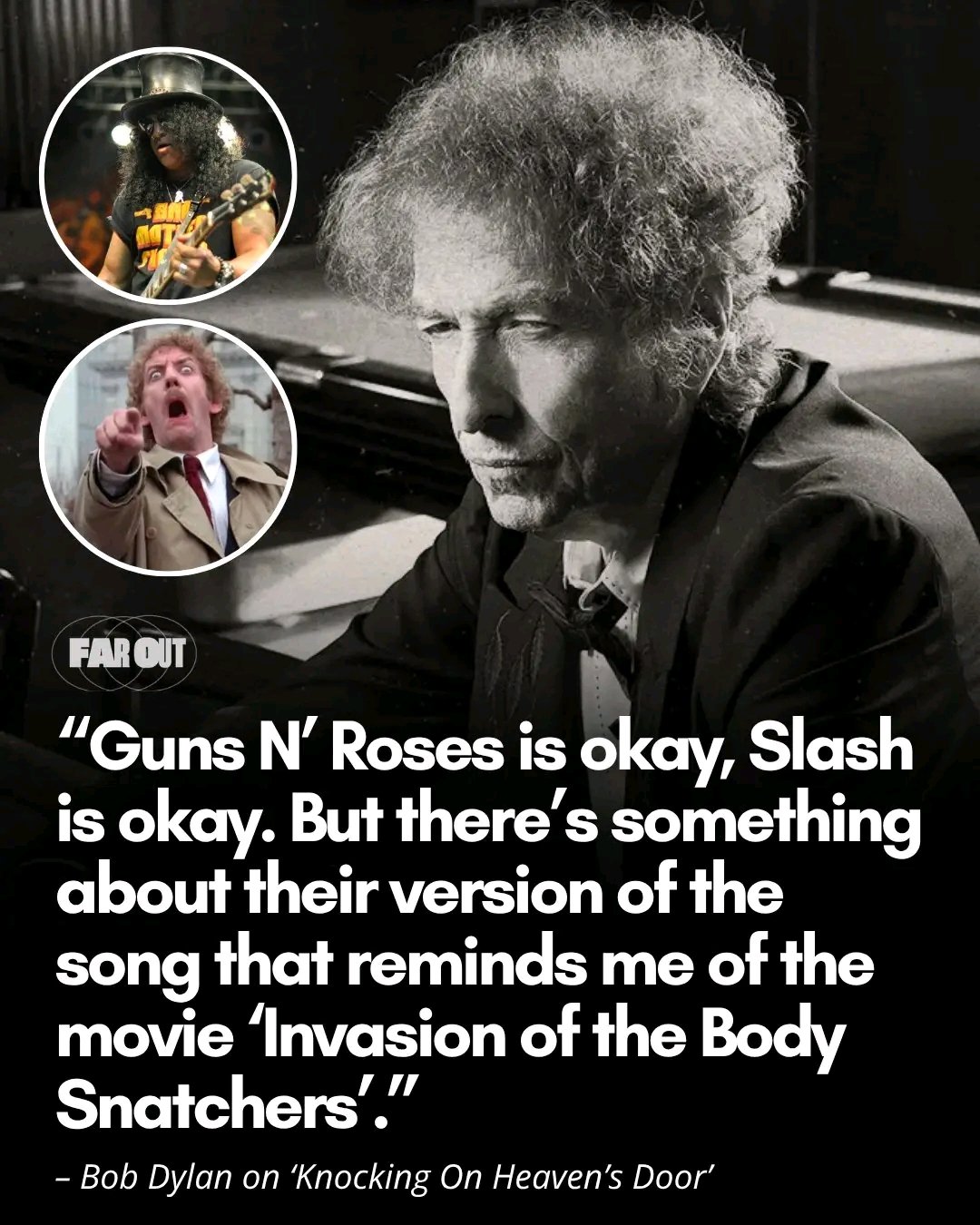
Covering a famous song can be one of the quickest ways for another artist to show respect to a musical legend. But sometimes, admiration goes horribly wrong.
Throughout music history, countless artists have taken beloved songs and attempted to put their own spin on them. Some covers became legendary in their own right. Others were warmly embraced by the original performers. And then there were the covers that left the songwriters and original artists decidedly unimpressed.
From Bob Dylan to David Bowie, several of music’s biggest names have made it clear that not every interpretation of their work deserves a standing ovation.
Here are five fascinating moments when legendary musicians reacted negatively or at least very critically to covers of their songs.
Bob Dylan and “All Along the Watchtower”
Few songs have been covered more famously than Bob Dylan’s “All Along the Watchtower.”
Dylan originally released the song in 1967, but Jimi Hendrix’s explosive 1968 interpretation quickly became so influential that many listeners eventually associated the composition almost as strongly with Hendrix as with Dylan.
However, Dylan’s relationship with covers of his work has never been straightforward.
Dylan has often demonstrated an unusual attitude toward his own songs. Rather than treating his original recordings as untouchable masterpieces, he has repeatedly changed arrangements, lyrics and performances throughout his career.
The Hendrix version, meanwhile, transformed the relatively sparse Dylan recording into a thunderous psychedelic-rock statement.
While Dylan has generally spoken positively about Hendrix’s interpretation and incorporated elements of it into his own live performances, the broader history surrounding his songs demonstrates an important truth: once a song is released, the songwriter no longer completely controls how audiences hear it.
And sometimes, musicians simply don’t recognize their own songs after another artist gets hold of them.
David Bowie and the Covers He Couldn’t Stand
David Bowie was famously protective of his artistic identity.
The Starman reinvented himself repeatedly, moving from glam rock to soul, electronic music, art rock and beyond. His songs became cultural landmarks, meaning that other musicians inevitably wanted to reinterpret them.
But Bowie did not automatically celebrate every cover.
One particularly interesting example involves “The Man Who Sold the World,” a song that gained an entirely new generation of listeners after Nirvana performed it during their legendary MTV Unplugged appearance.
Kurt Cobain’s haunting version was radically different from Bowie’s original recording.
Ironically, Bowie reportedly admired the performance. He later expressed frustration when young listeners approached him believing Nirvana had written the song.
That reaction reveals the strange burden carried by artists whose work becomes bigger than themselves: a cover can introduce millions of people to an original song while simultaneously causing confusion about its origins.
For Bowie, the problem wasn’t necessarily the quality of the cover it was what happened when the original disappeared behind the reinterpretation.
Johnny Cash and “Hurt”
Few covers have become as emotionally powerful as Johnny Cash’s version of Nine Inch Nails’ “Hurt.”
At first glance, it seems like the perfect example of an artist successfully transforming another musician’s work.
Cash’s late-career recording was devastatingly intimate. His weathered voice and stark delivery gave Trent Reznor’s industrial song an entirely different emotional meaning.
But Reznor initially had reservations about Cash recording it.
The song had been written from a deeply personal perspective, and hearing another artist reinterpret it was potentially risky.
Then Cash’s version arrived.
The result reportedly left Reznor stunned. Instead of destroying the original meaning, Cash created something so powerful that even the songwriter came to appreciate the transformation.
This story is important because it demonstrates the opposite side of the “hated cover” phenomenon: sometimes an artist fears the worst and ends up witnessing a masterpiece.
Paul McCartney and Unwanted Interpretations
Paul McCartney has spent decades watching other artists reinterpret Beatles and solo compositions.
With songs of enormous cultural importance, however, not every version can satisfy the original songwriter.
McCartney has occasionally been candid about performances and interpretations he disliked, illustrating how difficult it can be for songwriters to hear another person radically alter something they created.
For musicians, songs are not merely collections of notes and lyrics. They can represent specific periods of their lives, relationships, emotions and memories.
A performer hearing someone else sing those words may therefore experience something completely different from an ordinary listener.
That is why even technically brilliant covers can sometimes feel wrong to the person who wrote the song.
Led Zeppelin and the Battle Over Their Legacy
Few bands have had their catalog dissected, reinterpreted and reimagined as extensively as Led Zeppelin.
Songs such as “Stairway to Heaven,” “Whole Lotta Love” and “Kashmir” have inspired generations of musicians.
But Led Zeppelin’s members have not always welcomed interpretations of their work with open arms.
Robert Plant, Jimmy Page and the other members have been famously protective of the band’s musical legacy, particularly when it comes to versions that fundamentally change the character of their compositions.
Plant in particular has spent years emphasizing the importance of context, arrangement and atmosphere in Zeppelin’s music.
For fans, this creates an intriguing question: When does a cover become a tribute and when does it become something completely different?
WHY DO MUSICIANS HATE COVERS?
The answer may be more complicated than simple arrogance.
Imagine spending weeks, months or even years creating a song. You choose every lyric, melody, guitar part and vocal performance. Then another musician takes it and changes everything.
For listeners, that transformation can be exciting.
For the songwriter, it can be uncomfortable.
Sometimes the issue is a bad vocal performance. Sometimes it’s an arrangement that strips away what made the original special. And sometimes the musician simply doesn’t like hearing somebody else interpret something deeply personal.
Yet history repeatedly proves that covers can also achieve something extraordinary.
Hendrix transformed “All Along the Watchtower.” Cash reinvented “Hurt.” Nirvana introduced Bowie’s “The Man Who Sold the World” to an entirely new audience.
In some cases, the cover becomes almost as famous as the original.
And that’s the ultimate irony.
The very musicians who may dislike another artist’s interpretation can sometimes watch that version become immortal.
THE FINAL VERDICT
Music belongs to its creators but once a song reaches the public, it develops a life of its own.
Bob Dylan, David Bowie and other legendary musicians have all experienced the strange reality of hearing their creations transformed by someone else.
Some covers fail spectacularly.
Some cause controversy.
And a precious few become legendary.
Perhaps that’s the greatest danger and the greatest beauty of covering a famous song.
You never know whether you’re about to destroy a classic…
or accidentally create the next one.