
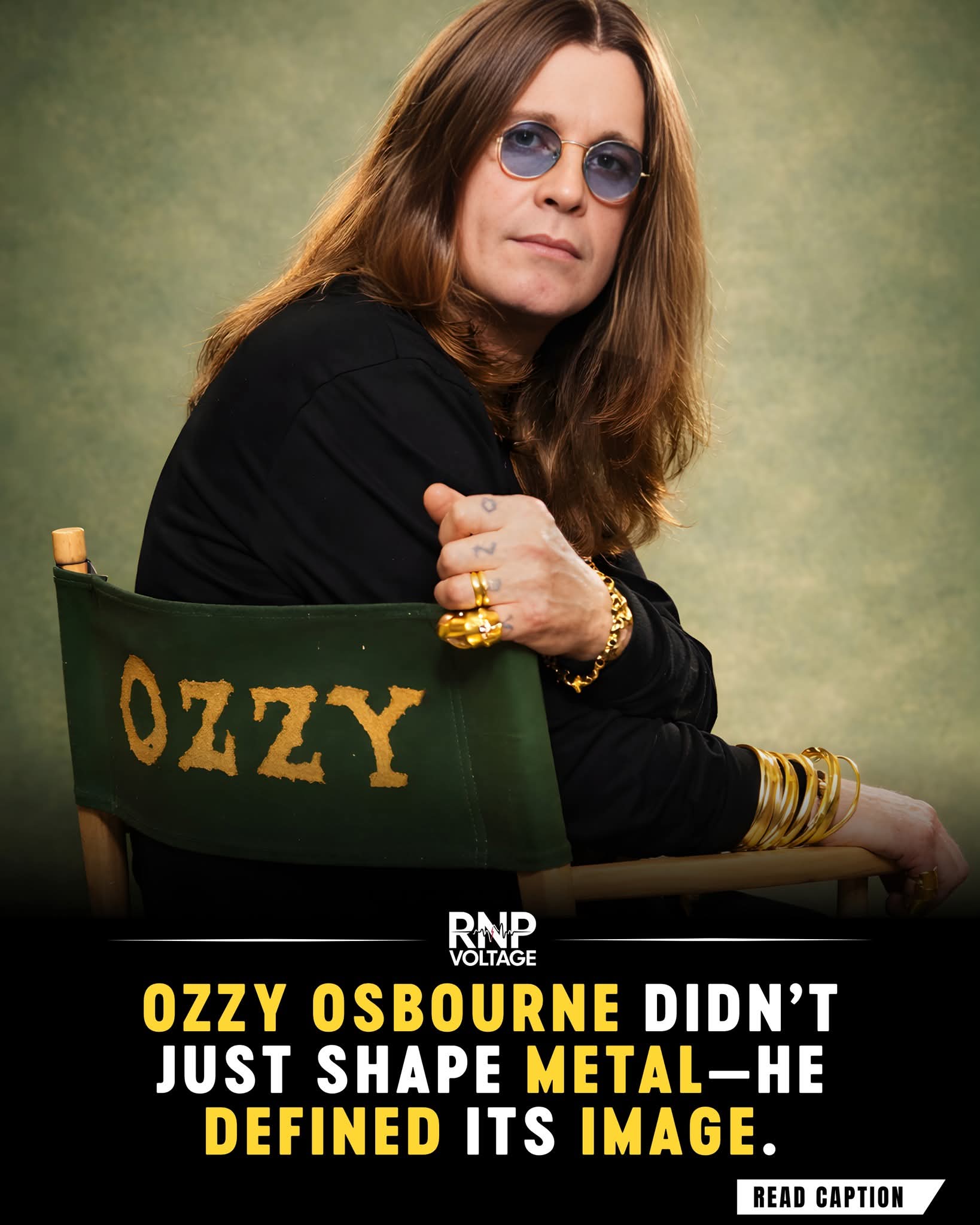
For more than five decades, Ozzy Osbourne has stood as one of the most recognizable and controversial figures in rock and metal history. Whisper his name anywhere in the world and you’ll ignite images of dark arenas, thunderous riffs, and a voice that helped build an entire genre from the ground up. Love him or fear him, one thing is undeniable: Ozzy didn’t follow the rules of rock he rewrote them.
The Birth of Heavy Metal Royalty
Long before stadium tours and reality television fame, Ozzy rose from working-class beginnings in Birmingham, England, to front one of the most influential bands in music history: Black Sabbath.
When Black Sabbath emerged in the late 1960s, the world had never heard anything quite like them. Their sound was darker. Heavier. More ominous. The thunderous guitar riffs, doomy atmosphere, and haunting vocals created a blueprint for what would soon be known as heavy metal.
At the center of that storm stood Ozzy.
His eerie, almost otherworldly vocal delivery became the defining voice of a generation seeking something heavier, more intense, more honest. Songs like “Paranoid,” “Iron Man,” and “War Pigs” didn’t just climb charts they shifted culture. The band’s self-titled debut album, Black Sabbath, is now widely considered the birth certificate of heavy metal.
And Ozzy? He was its wild-eyed messenger.
Chaos, Controversy, and Cultural Shockwaves
Ozzy’s career has never been quiet and that’s precisely why it has endured.
From theatrical stage antics to larger-than-life headlines, he became synonymous with rock excess. But beyond the shock value was something deeper: authenticity. Ozzy didn’t perform rebellion. He embodied it.
His presence on stage was electric. The energy felt unpredictable like anything could happen. That unpredictability helped define the modern rock spectacle. Smoke, darkness, crowd interaction, larger-than-life imagery the blueprint for arena metal was being written in real time.
Critics debated him. Parents feared him. Fans worshipped him.
And through it all, Ozzy’s name only grew louder.
Reinvention: The Solo Explosion
When Ozzy embarked on a solo career in the early 1980s, many questioned whether the magic would continue. It didn’t just continue it exploded.
His debut solo album, Blizzard of Ozz, became an instant landmark. Featuring unforgettable tracks like “Crazy Train,” it introduced a new era of Ozzy one that was bigger, sharper, and more theatrical than ever.
The album wasn’t just successful; it was genre-defining. It cemented Ozzy’s ability to evolve beyond Black Sabbath’s shadow and command the global stage on his own terms.
Arena tours followed. Platinum records stacked up. The Prince of Darkness wasn’t fading he was expanding.
The Image That Changed Rock
Ozzy’s impact extends beyond music charts and album sales. His image became a defining symbol of modern rock culture.
The long hair. The dark wardrobe. The cross necklaces. The mystique.
He embodied both danger and charisma, creating a persona that blurred the line between horror aesthetics and rock stardom. Future generations of metal and hard rock artists would borrow heavily from the theatrical intensity Ozzy popularized.
But his cultural reach didn’t stop with music
In the early 2000s, Ozzy entered millions of homes through reality television, introducing a new generation to his chaotic charm. Suddenly, the Prince of Darkness was also a dad navigating domestic life. It was unexpected. It was hilarious. And it humanized a legend without diminishing his mystique.
The myth grew even stronger.
A Legacy Written in Volume
Ask any modern metal artist about their influences, and you’ll hear his name.
From thrash to doom, from metalcore to arena rock, the sonic fingerprints of Ozzy and Black Sabbath echo everywhere. The heavy, down-tuned guitar sound that defined Sabbath became foundational for entire subgenres. The dark lyrical themes opened doors for deeper emotional expression in heavy music.
Ozzy didn’t just participate in heavy metal history he is heavy metal history.
Industry archives and historical records consistently cite him as a central architect of contemporary music’s heavier movements. His influence stretches across continents, languages, and generations.
That kind of impact doesn’t fade.
The Stagecraft Revolution
One of Ozzy’s most lasting contributions lies in performance itself.
Before him, rock shows were powerful. After him, they became theatrical events.
He understood something fundamental: fans didn’t just want to hear the music they wanted to feel it. To experience it. To step into a world.
Dark lighting, dramatic entrances, explosive energy these elements became standard in arena rock thanks in part to Ozzy’s blueprint. The idea that a metal concert could feel like a ritual, like stepping into another dimension, became embedded in the genre’s DNA.
Today’s massive metal tours, complete with cinematic visuals and immersive staging, owe a debt to that early evolution.
A Name That Transcends Eras
Few artists survive trends. Fewer still define them.
Ozzy’s name carries weight across multiple eras from vinyl and cassette tapes to streaming platforms and viral clips. Younger fans discover him through legendary recordings. Older fans remember the first time they felt the ground shake during a Sabbath riff.
His catalog continues to stream globally. His songs remain staples on rock radio. His presence even when off stage commands headlines.
And perhaps most remarkably, his story remains unfinished in the hearts of fans.
Beyond Sound: The Cultural Symbol
Ozzy Osbourne represents more than heavy metal.
He symbolizes survival in an unforgiving industry. Reinvention when doubted. Longevity in a genre built on intensity. His career mirrors the evolution of rock itself rebellious, controversial, theatrical, and endlessly loud.
From the smoky clubs of Birmingham to sold-out arenas across the globe, Ozzy’s journey charts the rise of heavy music from underground curiosity to global force.
That’s not just success.
That’s transformation.
The Echo That Won’t Fade
Decades after those first thunderous chords shook the world, the echo still rings.
The blueprint forged by Black Sabbath remains embedded in the DNA of heavy music. Ozzy’s solo catalog continues to fuel playlists, tours, and fan devotion. The theatrical intensity he pioneered still electrifies stages worldwide.
History will remember him not just as a singer, not just as a showman but as a catalyst.
A disruptor.
A legend.
And in the grand story of rock and metal, one truth remains carved in stone: Ozzy Osbourne didn’t simply stand in the spotlight.
He turned the darkness into light and made the world listen.
Source: Music industry archives and historical records. This content is for informational and entertainment purposes only.
Leave a Reply