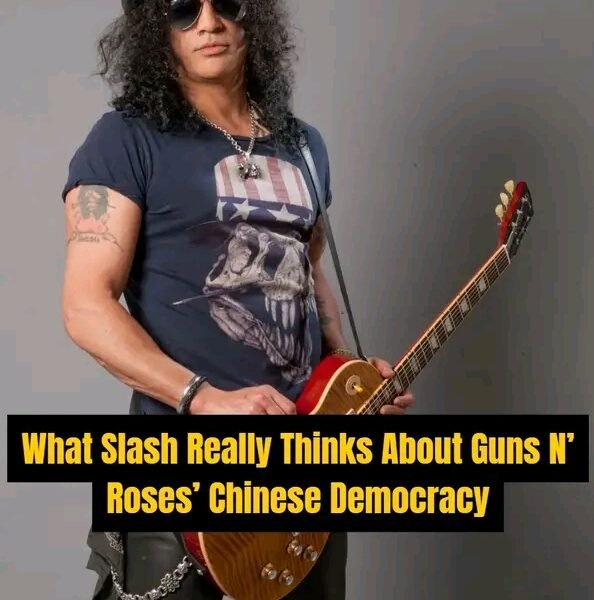
When Chinese Democracy was released in 2008, Slash’s relationship with Guns N’ Roses was already a thing of the past. Even so, he followed the album’s release and, years later, shared his thoughts on it….

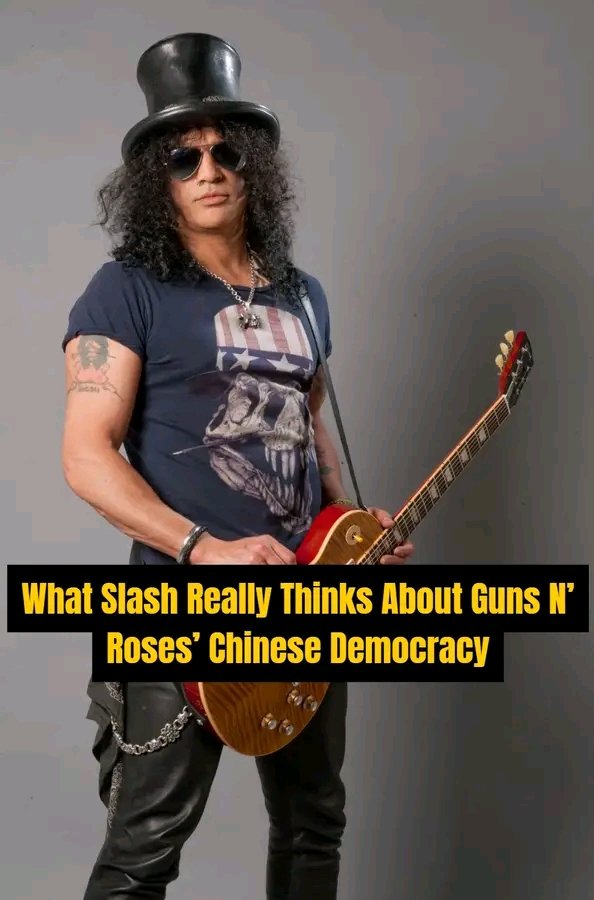
When Guns N’ Roses released Chinese Democracy in 2008, it wasn’t just another long-awaited album it was the final chapter of a fractured era. The record arrived after more than a decade of delays, lineup changes, legal battles, and silence. By the time it finally hit the shelves, the classic lineup fans once knew had already dissolved into history.
And for one of its most iconic former members, Slash, the album represented something even more complicated: a project from a band he had helped build, but no longer belonged to.
A Band Already in the Rearview Mirror
By the time Chinese Democracy was released, Slash had been out of Guns N’ Roses for over a decade. The breakup between him and frontman Axl Rose had been one of the most public and tense separations in rock history.
What once was a powerhouse partnership fueling legendary albums like Appetite for Destruction and Use Your Illusion I & II had collapsed under creative differences, personal clashes, and years of growing mistrust. So when the album finally arrived in 2008, Slash was no longer part of the story. He was, instead, one of its most famous outside observers.
The Long Shadow of Chinese Democracy
Few albums in rock history carried as much anticipation as Chinese Democracy. For years, it had become a running joke in the music industry an album rumored, delayed, reworked, and nearly mythologized.
When it finally dropped, fans and critics were split. Some praised its ambition and layered production, while others questioned whether it lived up to the legacy of Guns N’ Roses’ earlier work.
But one of the most interesting perspectives came from someone who had no involvement in its creation: Slash himself.
Slash Breaks His Silence
In interviews following the release, Slash made it clear that he had no part in the album’s development and wasn’t trying to insert himself into its narrative. However, as a longtime fan of the band he helped build, he couldn’t ignore it either.
He acknowledged that he listened to Chinese Democracy, but his reaction was measured rather than emotional. He described it as an “Axl record,” emphasizing that it reflected Axl Rose’s vision more than the collaborative spirit that once defined Guns N’ Roses.
In essence, Slash recognized the album not as a continuation of the classic band he once played in, but as something entirely separate.
Respect Without Reconnection
Despite the history between them, Slash has generally avoided harsh criticism of the album. Instead, his comments have leaned toward detachment rather than hostility. He has often framed it as something he simply wasn’t involved in, and therefore couldn’t fully judge in the same way fans or critics might.
This perspective is important. It shows a clear line between personal history and artistic output. Even though Chinese Democracy carried the Guns N’ Roses name, Slash viewed it as a project shaped by a very different creative environment.
Still, that doesn’t mean he was indifferent. Like many fans, he understood the cultural weight the album carried and the long road it took to arrive.
A Divided Legacy
When discussing Chinese Democracy, it’s impossible to ignore its place in rock history. On one hand, it marked the return of one of the most legendary rock names after 15 years of silence. On the other, it lacked the classic lineup that defined its golden era.
Slash’s perspective adds another layer to that divide. His reaction highlights a central truth: Guns N’ Roses had already split into two identities long before the album was released.
One was the original band that reshaped rock in the late 1980s. The other was Axl Rose’s evolving vision, carried forward under the same name but with a completely different creative direction.
Time Changes Everything
Years after the release, time has softened some of the tension surrounding Chinese Democracy. Interestingly, Slash eventually reunited with Axl Rose and Duff McKagan for a global Guns N’ Roses reunion tour, proving that old divisions weren’t permanent.
However, Chinese Democracy remains a unique artifact a snapshot of a band name carrying forward without its original creative core intact.
For Slash, that album represents a moment frozen in time: a project completed during years of separation, released before reconciliation was even imaginable.
What Slash’s Reaction Really Means
Slash’s comments about Chinese Democracy were never dramatic or explosive. Instead, they were quietly revealing. They showed a musician who had moved on, but still respected the history he helped shape.
His response also reflects something deeper about legacy bands: once a group becomes iconic, its name can outlive its original chemistry. The music continues, but not always with the same DNA.
In that sense, Slash’s reaction wasn’t just about one album it was about the evolution of a band that once defined an era of rock and roll.
A Final Reflection
Today, Chinese Democracy stands as one of the most debated albums in rock history. It is both a comeback story and a symbol of fragmentation. And Slash’s distant, reflective response captures that duality perfectly.
He didn’t dismiss it. He didn’t embrace it. He simply acknowledged it for what it was: a project born from a band he once helped shape, but no longer controlled its direction.
And perhaps that’s what makes his perspective so compelling. In the end, Slash’s thoughts on Chinese Democracy remind fans that even the loudest rock legends eventually become observers of their own legacy.