What made the Guns N’ Roses reunion so massive was not just the nostalgia; it was the fact that so many fans never truly believed they would see Axl Rose, Slash, and Duff McKagan share a….

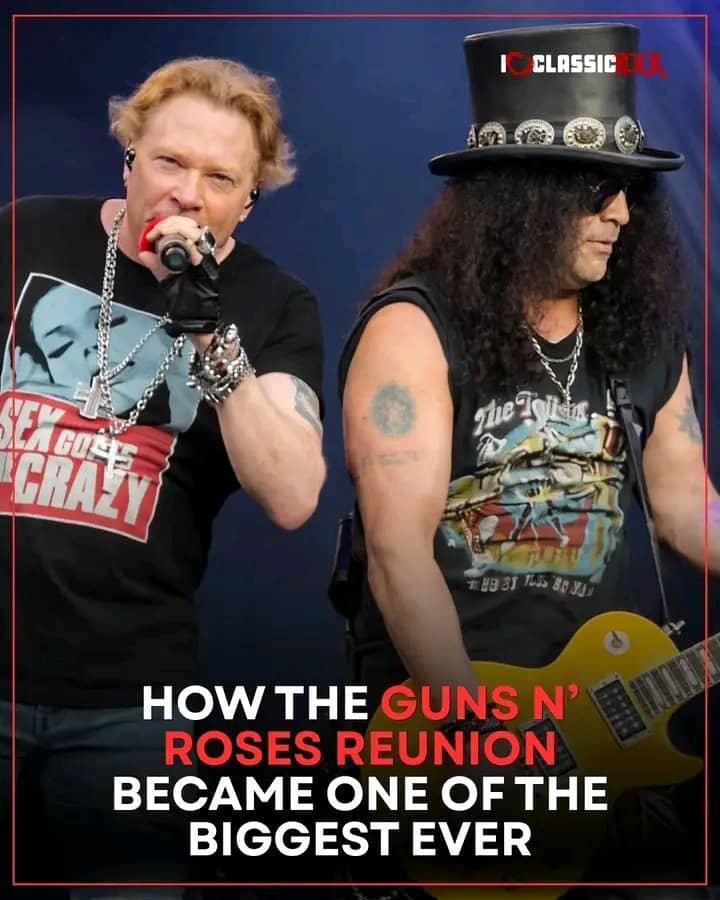
When Guns N’ Roses finally stepped back onstage with Axl Rose, Slash, and Duff McKagan united once again, the world didn’t just react with excitement — it erupted. This wasn’t a routine band reunion. This wasn’t a nostalgic cash-grab. This was the resurrection of a musical force many fans had written off as impossible. What made the Guns N’ Roses reunion so massive was not just the familiar chords, the old-school swagger, or the return of the iconic “Big Three.” It was the disbelief the shock that it was even happening at all.
For decades, the idea of seeing Axl, Slash, and Duff together again was treated like a joke in the rock community. A myth. A “maybe someday” that everyone pretended to hope for but no one truly believed. The feuds were too deep. The wounds were too real. The years had been too long. But that impossibility is exactly what made their reunion one of the most powerful moments in rock history a moment fans across generations refused to miss.
A Rift That Seemed Permanent
To understand why the reunion hit with such an earthquake-level impact, you have to remember how fractured the band had become. By the mid-1990s, Guns N’ Roses wasn’t just broken it was detonated. Slash walked away in 1996. Duff followed in 1997. The classic lineup was scattered, communication was nonexistent, and every interview from that era made the divide look worse.
Axl and Slash weren’t just on bad terms. They were publicly, famously, explosively opposed. Lawsuits, accusations, broken communication, years of silence it all built a narrative so strong that fans accepted one painful truth:
Guns N’ Roses were never getting back together.
Every year that passed cemented that belief. Axl continued with a new lineup. Slash moved on to Slash’s Snakepit, Velvet Revolver, and solo work. Duff built a career across multiple bands and projects. Each man carved his own path, and all signs pointed to separate futures.
That’s why when the rumors started swirling in late 2015 quiet whispers, small hints, cryptic comments nobody dared to believe them. Fans wanted it so badly that they refused to get their hopes up. The heartbreak would have been too big.
When the Impossible Became Reality
And then… it happened.
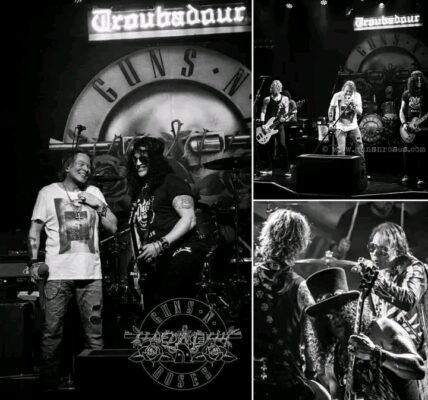
The announcement. The posters. The “Not In This Lifetime…” branding — a tongue-in-cheek admission of how impossible the reunion had once been. The California shows. Coachella. The Troubadour.
Suddenly, the three legends were back onstage, shoulder to shoulder, sharing the same songs, the same spotlight, the same fire they had created decades earlier. The reunion wasn’t just real it was massive, global, unavoidable. It dominated headlines. It shattered records. It reignited a fanbase that had been waiting half a lifetime.
But what made it explode wasn’t just the fact that it was happening. It was that so many people had believed it never would.
This wasn’t nostalgia.
This was a miracle.
Generational Shockwaves
When a band like Guns N’ Roses reunites, it’s more than a concert announcement. It’s a cultural event. Fans who had grown up with Appetite for Destruction in the 1980s suddenly found themselves buying tickets right alongside fans born decades later, who had only heard stories about the band’s chaos, history, and mythic energy.
Parents brought their kids. Lifelong fans traveled across countries. People who had never seen them live before refused to miss their only chance.
The tour didn’t just perform well it dominated the world. “Not In This Lifetime…” became one of the highest-grossing tours in music history, rivaling acts like The Rolling Stones, U2, and Taylor Swift.
The reunion became a once-in-a-generation phenomenon because it united three types of fans at the same time:
Fans from the original era, who never thought they’d relive the magic
Younger fans, who never thought they’d get a chance to see it
Casual fans, who were drawn in by the spectacle, the headlines, the “this is history” energy
It created a perfect storm a seismic moment where disbelief turned into celebration.
The Emotion Behind the Return
Another reason the reunion hit so hard is simple: it was emotional.
Guns N’ Roses meant something powerful to people. Their music wasn’t background noise it was the soundtrack to lives, memories, heartbreaks, victories. To see the fractured pieces come together again felt like witnessing a healing moment, not just for the band, but for everyone who had followed them.
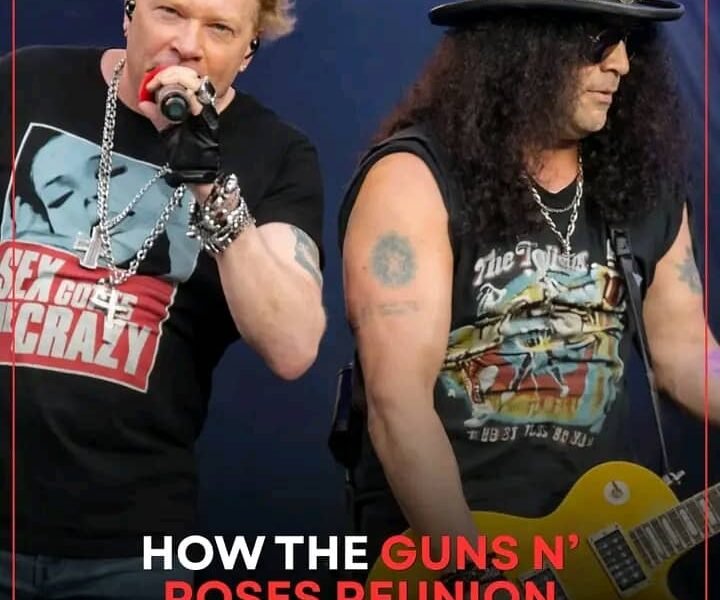
Slash and Axl sharing a stage again wasn’t just a musical image it was symbolic. It represented forgiveness, growth, maturity, and the idea that even the deepest rifts can be repaired. Fans weren’t just celebrating music. They were celebrating the unlikely return of something they had long believed was gone forever.
A Reunion Fueled by Mystery and Myth
Unlike many modern acts, Guns N’ Roses had built a legacy of unpredictability. Nobody ever knew what they were going to do, who was going to show up, or whether the machine was going to explode again. That unpredictability added to the excitement.
Every night of the reunion tour carried a sense of “anything could happen.”
Would they play something rare?
Would the energy explode?
Would someone storm off?
Would the world witness a chapter of rock history rewrite itself?
That tension electrified the experience.
Why It Still Matters Today
Years later, the impact of the reunion hasn’t faded. New fans are still discovering the band. The tour continues to break attendance numbers. And every show is a reminder of why this reunion was so massive:
Because it wasn’t expected.
Because it wasn’t guaranteed.
Because it wasn’t supposed to happen and then it did.
When Axl, Slash, and Duff returned to the same stage, they didn’t just reunite. They restored a legend. They reignited a cultural force. They delivered something fans had long accepted they would never see again.
And that is why the Guns N’ Roses reunion became one of the biggest musical moments of the century not just a concert, but a miracle fulfilled.